The UEFA Champions League quarter-finals 2026 are here, and this is where the tournament truly starts to separate contenders from pretenders. After a demanding Round of 16, eight clubs remain, and the first‑leg ties on April 7–8 set the tone for who will be heading to Budapest and who will be going home. If you’re looking to understand how the Champions League quarter-finals work, what the key storylines are, and, more importantly, where the value lies at ibet, you’re in the right place.
And the storylines? They’re elite. PSG are defending champions and host a Liverpool side having their most chaotic season in a decade. Barcelona welcomes an Atlético Madrid team that looks far more open and goal‑heavy than the stereotypical Simeone low‑block machine.
Meanwhile, Real Madrid renew their rivalry with Bayern Munich in another heavyweight clash, and Sporting CP try to turn their Lisbon fortress into a graveyard for Arsenal’s perfect league‑phase campaign. This is what the Champions League quarter-finals are all about.
Champions League Quarter-Finals Promo
Before you lock in these picks, maximize your edge with ibet’s Champions League promotions and sports betting deals. Take advantage of the Champions League Free Bet Challenge tied to the knockout rounds: just place qualifying bets on each quarter-final matchday (minimum odds 1.80) and receive free bets every Thursday!
- Bet €30–€59.99 for €5
- Bet €60+ for €10
You can also protect your positions with ibet’s ACCA Insurance (up to €60 cash back daily) or start earning 5% weekly cashback (up to €200 every Monday). Check the ibet promotions page to access the latest Champions League betting promos and full terms.
If you’re looking beyond the Champions League quarter-finals, including the semi‑finals and outright markets, make sure to explore ibet’s dedicated Champions League betting hub and our betting news blog for data‑driven previews, trends, and prop angles across every matchday.
Champions League Quarter-Finals Tips for First Leg
Here’s what we’re backing for the first legs of the Champions League quarter-finals, with full analysis just below:
- PSG vs Liverpool: Khvicha Kvaratskhelia Over 1.5 Shots on Target at 2.25 at ibet
- Barcelona vs Atlético Madrid: Robert Lewandowski Over 2.5 Total Shots + Dávid Hancko Over 0.5 Fouls Conceded at 1.81 at ibet
These are not random “fun” bets. They’re built on usage, xG profiles, tactical matchups, and expected game scenarios in two of the most compelling ties of the round.
Champions League Quarter-Finals Fixtures at a Glance
Tuesday, April 7, 2026
- Sporting CP vs Arsenal — Estádio José Alvalade, Lisbon | 21:00 CET
- Real Madrid vs Bayern Munich — Santiago Bernabéu, Madrid | 21:00 CET
Wednesday, April 8, 2026
- Barcelona vs Atlético Madrid — Camp Nou, Barcelona | 21:00 CET
- Paris Saint‑Germain vs Liverpool — Parc des Princes, Paris | 21:00 CET
Champions League Quarter-Finals Best Bets
PSG vs Liverpool
Wednesday, April 8, 2026, at 21:00 (CET) — Parc des Princes
Champions League Pick: Khvicha Kvaratskhelia Over 1.5 Shots on Target at 2.25 at ibet
This is a classic example of a prop where role, matchup, and game state all line up. Khvicha Kvaratskhelia is PSG’s primary ball‑dominant threat on the left and he lives on high‑value actions: carries into the box, 1v1s isolated against full‑backs, and shots from central or inside‑left zones rather than desperate 30‑yard attempts. With PSG projected to control both territory and xG at home, Kvara is one of the main endpoints of that possession, which is exactly the profile your handicapping system wants for a shots‑on‑target over.
The matchup against this version of Liverpool is specifically favourable. Liverpool travel without Alisson and without Wataru Endo, which materially weakens both their shot‑stopping and their ability to protect the back four. Defensively, they still play a high line, full‑backs push on, and the midfield no longer controls space and tempo the way it did at its peak. That is the dream scenario for Kvaratskhelia: he can receive wide, drive at a retreating right‑back and right‑centre‑back, or dart into the half‑space and shoot across a second‑choice goalkeeper. Rather than needing a speculative worldie to test the keeper, he should be able to generate multiple high‑probability efforts simply by reproducing his usual involvement.
Keep the Pressure
Game script is where your system really leans into this bet. In a Champions League quarter-final first leg, PSG have no incentive to shut up shop at 1–0. With no away‑goals rule and a deep attacking rotation, Luis Enrique is more likely to keep pressing for a second and even third goal, especially at home. If PSG score first, Liverpool will have to push out and press higher, creating even more transition space for Kvaratskhelia to attack; if Liverpool score first, Paris will dominate the ball and funnel attacks through their most creative 1v1 outlet on the left. In both cases, our tempo and transition metrics project a high‑event match and sustained PSG pressure, which translates directly into repeated shot opportunities for Kvara.
The price is the final piece of the value puzzle. At 2.25, the market is implying something like a mid‑40s true probability for Kvaratskhelia to put at least two efforts on target, once vig is accounted for. Given his usage, shot profile and the projected xG environment, it should land above that, especially when factoring in Liverpool’s weakened goalkeeping and defensive spine. You’re not betting on a once‑in‑a‑season explosion; you’re backing a high‑volume, high‑xG winger in an ideal home favourite spot to do what he already does on a consistent basis: test the goalkeeper multiple times.
Barcelona vs Atlético Madrid
Wednesday, April 8, 2026, at 21:00 (CET) — Camp Nou
Champions League Quarter-Finals Pick: Robert Lewandowski Over 2.5 Total Shots + Dávid Hancko Over 0.5 Fouls Conceded at 1.81 at ibet
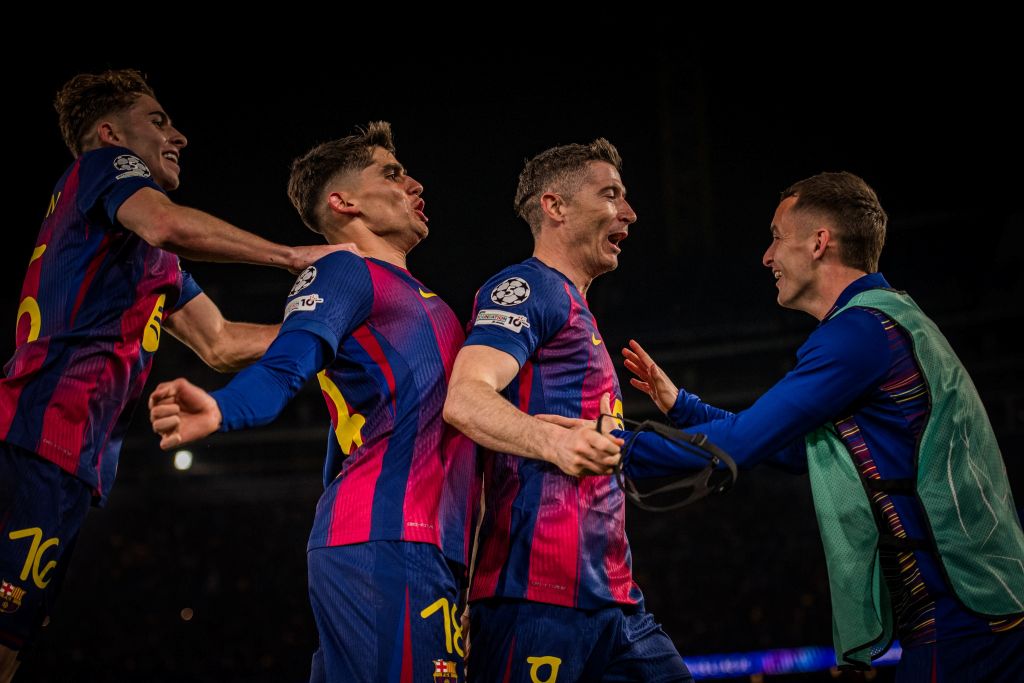
This combo is built around one core assumption that our model strongly supports: Barcelona will drive the flow of this match, and Atlético’s left‑sided centre‑back will be under constant stress dealing with Lewandowski in and around the box. Lewandowski’s underlying shot metrics remain elite with roughly 3–4 attempts per 90 in domestic play. Around half of them are on target, and similar or better volume when Barcelona are heavy home favourites. In big attacking spots, his volume naturally drifts up toward 3+ attempts as Barça pile up crosses and cutbacks. In a Champions League quarter-final, with Barcelona expected to generate robust xG at home against a fragile defence, our system projects Lewandowski’s “normal” range comfortably at or above the 3‑shot mark.
Game Script
The tactical environment turns that baseline into a strong over. Barcelona will likely field Lamine Yamal and Marcus Rashford in wide roles with Cancelo overlapping, creating relentless service from both flanks, while Pedri and Gavi (or Fermín López) supply through‑balls and second‑phase entries. Atlético’s expected back line features Dávid Hancko on the left of central defence, partnered with Le Normand and shielded by a midfield that is missing some of its usual energy and ball‑winning due to injuries and suspensions. That puts Hancko directly in the firing line for Lewandowski’s movement: near‑post darts, back‑post bodying on crosses, and clever double‑moves on cutbacks. This is a clear shot‑location mismatch—high‑quality box touches for Lewa vs a defender being asked to absorb repeated high‑stress actions.
Hancko’s foul profile completes the picture. In league play this season he’s committed roughly 0.6 fouls per 90 minutes, which means a single foul is already more likely than not in a standard match. Atlético as a team average double‑digit fouls per game and remain among La Liga’s more persistent foulers; that doesn’t suddenly improve when you ask them to contain Lewandowski, Rashford and Yamal with a backup goalkeeper behind them. From a situational point of view, a Champions League quarter-final first leg away at Barcelona, with Atleti often pinned deep and dealing with wave after wave of attacks, is precisely the environment where a centre‑back at that baseline drifts upward toward one or more fouls.
The Pick
Crucially, these legs are positively correlated by the expected script, which is exactly what you want in a targeted same‑game combo rather than independent coin flips. If Barcelona control possession and chances as projected, Lewandowski’s shot count rises as he sees more box touches and set‑piece targets, while Hancko’s foul probability climbs as he is repeatedly forced into contact situations like shirt pulls, late challenges, and small tactical fouls to disrupt dangerous runs. In other words, the same attacking patterns that could produce three or more Lewandowski shots naturally also increase the likelihood that Hancko concedes at least one foul.
At a combined price of 1.81, you’re almost being offered even-money to back Barça’s attacking edge to manifest in two highly connected ways our data already describes: Lewandowski getting his volume, and Hancko having to stop him the hard way
Champions League Quarter-Finals Recap: How We Got Here
To fully appreciate these Champions League quarter-finals, it helps to look at how each of the eight remaining teams punched their ticket in the round of 16.
This stage was anything but cagey: Bayern Munich produced a 10–2 aggregate demolition of Atalanta, PSG overwhelmed Chelsea 8–2 over two legs, Barcelona brushed aside Newcastle 8–3, and Real Madrid calmly dispatched Manchester City 5–1 on aggregate. Sporting CP and Liverpool delivered two of the most dramatic turnarounds of the round.
Meanwhile, Sporting overturned a 3–0 first‑leg deficit against Bodø/Glimt with a 5–0 extra‑time hammering in Lisbon, while Liverpool responded to a 1–0 loss in Istanbul by smashing Galatasaray 4–0 at Anfield to win 4–1 overall. Arsenal did what elite sides are supposed to do in this format, following up a 1–1 away draw at Bayer Leverkusen with a controlled 2–0 home win to advance 3–1 on aggregate.
How the Champions League Quarter-Finals Work & Why First Legs Matter
Under the new format, the Champions League quarter-finals are still played over two legs, home and away. The team with the better aggregate score advances to the semi‑finals; if the aggregate is level after 180 minutes, the tie goes to extra time and penalties if needed. Importantly, the away‑goals rule has been abolished, so goals scored away from home no longer carry extra weight in tiebreakers—though the psychological value of scoring on the road remains very real.
First legs tend to have their own tactical ecosystem. Managers want an advantage, but not at the cost of losing the tie inside 90 minutes. Sides at home in the first leg often press to establish a lead while still guarding against giving up cheap transitions; teams away in the first leg know they will host the return and can live with narrow defeats or draws. From a betting perspective, this often means slightly lower raw scoring than the talent would suggest in some ties, but in others, like Barcelona vs Atlético or PSG vs Liverpool, it means controlled chaos: enough aggression to produce goals, but not the all‑out abandon you see in desperate second legs.
Betting Strategy & What to Watch in the Quarter-Finals
The first-legs of Champions League quarter-finals are about context over vibes. Understanding each team’s tactical identity, depth, schedule, and psychological state is as important as raw xG and form numbers. Favourites with deep squads and strong home xG are often better expressed through team totals and carefully chosen props than laying big moneyline prices. Underdogs with potent transitions and set‑piece threats may offer more value via BTTS and player shots/corners than straight 1X2.
Player props become especially attractive at this stage. High‑usage forwards on favourites (like Lewandowski and Kvaratskhelia) benefit from volume and game state, while defenders on underdogs rack up tackles, clearances and fouls as they absorb pressure. Corners and cards markets also tend to heat up: pressing and tactical fouls escalate with the stakes, and referees often “manage” matches with yellows rather than early reds, increasing card counts without ending 11‑v‑11 dynamics.
Champions League Quarter-Finals FAQ
Are the Champions League quarter-finals two legs?
Yes. The Champions League quarter-finals are two‑legged ties. Each matchup is played home and away, and the team with the better aggregate score over the two matches advances to the semi‑finals. If the aggregate score is tied after both legs, the tie goes to extra time and, if necessary, penalties. The away‑goals rule has been abolished, so away goals no longer provide an automatic tiebreak advantage.
When are the Champions League quarter-final first legs played?
The first legs of the Champions League quarter-finals in the 2025–26 season are played on Tuesday, April 7, 2026 and Wednesday, April 8, 2026, with all four ties kicking off at 21:00 CET. The second legs follow the next week on April 14–15, again in the 21:00 CET slot.
How are quarter-final matchups decided?
Quarter-final matchups are determined by a draw held after the round of 16, with no seeding or country protection—meaning clubs from the same league can face each other and previous opponents can be drawn again. The draw also fixes the order of home and away legs. The evolution of the 36‑team league phase and playoff rounds determines who reaches this stage, but once you’re in the quarter-finals, it’s a pure open draw.
All odds displayed on this page were correct at the time of writing and may have moved since the content was published. Betting markets shift constantly based on action and betting news. For the latest odds and current lines, visit the ibet Sportsbook.