The World Cup Golden Boot is one of the most exciting individual markets in World Cup betting. It asks a simple question, but the answer is never simple: who scores the most goals before the tournament ends in July?
After 2 rounds of World Cup 2026 group-stage matches, the market has already started to move. This is no longer just a pre-tournament discussion about reputation, squad strength and projected minutes. We now have real evidence: which teams are creating chances, which forwards are getting service, which favourites are likely to win their groups, and which players could benefit from a longer path through the new Round of 32.
The expanded 48-team format makes the Golden Boot race even more interesting. More teams, more matches and an extra knockout round create more scoring opportunities, especially for forwards playing on high-powered attacking sides. France, Argentina, Portugal, Spain, the Netherlands, Norway and England all remain central to the conversation, while the final group-stage matches could reshape the odds again before the knockout bracket is confirmed.
For bettors, this is where the market becomes sharper. The best Golden Boot bets are not just about picking the biggest name. They are about minutes, penalties, group position, opponent quality, knockout route and whether a team is likely to create enough chances across 6 or 7 matches. This World Cup Golden Boot betting guide breaks down how the market works, what has changed after Round 2, the main contenders, and where the best value sits with the latest World Cup Golden Boot odds at ibet.
Editor’s Note: The World Cup 2026 odds in this article were updated on June 24, 2026.
For broader tournament context, check out our 2026 World Cup betting articles. Want to know who is favourite to lift the trophy? See the latest outright World Cup winner odds or explore the full World Cup group breakdown for June.
Before placing your World Cup bets remember to visit the ibet promotions page for current offers, and don’t forget to keep an eye on the ibet betting news blog for more football betting insights like our Champions League content or our Veikkausliiga guide.
If you want to take advantage of the value other sports offer, check out our Stanley Cup odds article or our Finnish hockey Liiga betting guide.
Now let’s break down the World Cup Golden Boot odds!
World Cup Golden Boot Tips
Here’s what we’re backing for the World Cup Golden Boot outright, with full analysis in the guide below:
- Erling Haaland to win Golden Boot at 15.00 at ibet
- Lautaro Martínez to win Golden Boot at 26.00 at ibet
- Florian Wirtz to win Golden Boot at 40.00 at ibet
- Vinicius Jr to win Golden Boot at 26.00 at ibet
*Original odds prior to June 11th, 2026.
These are not sentiment bets. They are built on scoring path, role clarity, group-stage mismatch potential, and price relative to realistic tournament outcomes.
World Cup Golden Boot Odds
Current Favourites at ibet
All odds below are sourced directly from ibet’s sportsbook and reflect current market pricing for the 2026 World Cup Golden Boot outright winner as of June 24, 2026.
| Player | Team | ibet Odds | Angle |
| Lionel Messi | Argentina | 2.75 | Market leader after Argentina’s controlled start |
| Kylian Mbappe | France | 3.00 | France scoring freely, still the main challenger |
| Erling Haaland | Norway | 7.00 | Elite finisher with Norway already in strong scoring form |
| Harry Kane | England | 9.00 | Penalty profile helps, but England need more attacking rhythm |
| Cristiano Ronaldo | Portugal | 23.00 | Portugal’s 5-0 response keeps him in the conversation |
| Mikel Oyarzabal | Spain | 25.00 | Spain’s attack clicked in Round 2, but role and minutes matter |
| Deniz Undav | Germany | 25.00 | Germany’s strong start makes him a live outsider |
| Lamine Yamal | Spain | 30.00 | Creative ceiling is elite, but goal volume is the question |
| Vinicius Júnior | Brazil | 30.00 | World-class profile, but Brazil’s market trust has cooled |
| Kai Havertz | Germany | 40.00 | Germany’s route helps, but shared goal responsibility limits ceiling |
| Matheus Cunha | Brazil | 40.00 | Brazil upside remains, but minutes and role are key risks |
| Ayase Ueda | Japan | 40 | Japan’s attacking form makes him a genuine longshot angle |
Top 5 Contenders to Know
| Player | Odds | Team | Verdict |
| Lionel Messi | 2.75 | Argentina | Market leader after Argentina’s controlled start. Short price, but the role is clear. |
| Kylian Mbappe | 3.00 | France | Best team context in the race. Benchmark contender with France scoring freely. |
| Erling Haaland | 7.00 | Norway | Elite finishing profile. Still value if Norway’s route stays open. |
| Harry Kane | 9.00 | England | Penalty profile keeps him live, but England need more attacking rhythm. |
| Cristiano Ronaldo | 23.00 | Portugal | Legacy angle with a scoring team behind him, but age and minutes are the variables. |
Why the Market Is Moving
The Golden Boot market has tightened sharply after 2 rounds. Messi and Mbappe have separated from the field because Argentina and France look controlled, efficient and likely to go deep. Haaland is still close enough to matter at 7.00, especially with Norway scoring freely, but his route depends heavily on how they handle France and the Round of 32 path.
Kane has drifted into a more cautious range after England’s 0-0 draw with Ghana, while Ronaldo is now the fifth name on the board after Portugal’s 5-0 win over Uzbekistan brought their attacking ceiling back into focus. The deeper value now sits beyond the top 5, with players like Mikel Oyarzabal, Deniz Undav, Lamine Yamal, Vinicius Júnior and Ayase Ueda offering bigger prices if their teams keep creating chances.
How World Cup Golden Boot Betting Works
What Counts Toward the Award
The Golden Boot is awarded to the player who scores the most goals across the entire tournament, from the group stage through to the final. Goals scored in normal time and in extra time both count. Qualification play-off goals do not count, so that means the clock starts at the opening group game. Every goal a player scores from the moment their team kicks off in the group stage is added to their tally, regardless of the result or the importance of the game.
How Ties Are Settled
FIFA uses a sequential tiebreaker to separate players who finish level on goals. The first tiebreaker is assists so, in case of a tie, the player with more goal assists is ranked higher. If still level, minutes played determines the winner, with fewer minutes constituting better efficiency and therefore a higher ranking. This means that, in a tight race, a player who scores six goals having come on as a substitute in several games could theoretically pip a rival who scored six but played every minute. For sharp bettors, this matters when evaluating players with different usage profiles given an impact sub who scores heavily could still win based on minutes… should there be a tie.
Extra Time and Penalties
Goals scored in extra time count. The question comes up every tournament: if a knockout game goes to a penalty shootout and a player scores from the spot, do those count? The answer is no. Penalty shootout goals are not competitive goals and instead they are a tiebreaking mechanism, not part of play. They do not count toward a player’s Golden Boot tally. Only goals scored during active play, so this means only normal time and extra time are included.
Why the 2026 World Cup Changes the Race
The 48-Team Format
The 2026 World Cup uses an expanded 48-team field arranged into 12 groups of four, with the top two from each group plus the eight best third-placed teams advancing to a Round of 32. This is a fundamental structural break from the 32-team model that has defined the tournament since 1998. The field includes more debutant nations, more lower-ranked sides, and more heavily lopsided group fixtures where elite strikers will face opposition they can genuinely put to the sword. The old mental model, where the group stage involved three reasonably competitive fixtures no longer applies.
Extra Knockout Round
Finalists in 2026 will play eight matches, not seven. That additional game matters for Golden Boot calculations. Historically, the threshold for winning the award in a competitive tournament has been around six goals. With an extra knockout fixture added to the route to the final, and with more group-stage mismatches generating higher goal counts, the realistic winning total in 2026 is likely to shift upward. Bettors using the historical six-goal benchmark as a shortlisting tool should adjust that number upward.
More Matches, More Scoring Chances
A player who goes deep into the World Cup 2026 has more opportunities to accumulate goals than any previous tournament. Eight matches versus seven is a 14 percent increase in scoring runway. For strikers whose teams rely on them heavily (example: Mbappé, Kane, Haaland) the additional game represents a meaningful bump in expected goals. But the edge compound: players on strong teams not only play more games but spend more of those games against weaker opponents, particularly in the Round of 32, where the eight best third-placed finishers from pool groups face the group winners. Bracket path is the single biggest variable in this market.
Why Weaker Groups Matter More
In the 48-team format, the introduction of nations like Jordan, Cape Verde, Uzbekistan, and other first-time or rarely-seen participants into the groups creates genuine hat-trick opportunities that simply did not exist in previous tournaments. The 2014 James Rodríguez effect, where a relatively unexpected scorer ran up six goals partly on the back of heavy group fixtures, is now more achievable for a wider range of players. When evaluating World Cup Golden Boot candidates, map their group opponents individually. A player in a group containing two debutant nations and a weaker confederation qualifier is operating in a structurally different scoring environment than one in a group with two established European sides.
Top 5 Favourites for the World Cup Golden Boot
Lionel Messi’s Case
Lionel Messi is now the Golden Boot favourite at 2.75 at ibet. That is a major shift from the pre-tournament market, and it reflects Argentina’s controlled start to the tournament. The defending champions have beaten Algeria 3-0 and Austria 2-0, already securing top spot in Group J with 5 goals scored and none conceded.
Messi’s case is built on role, rhythm and team path. Argentina are creating enough chances, controlling matches well and protecting their key players from chaotic game states. Messi remains central to their attack, set pieces and penalty picture, which gives him several routes to goals even when Argentina are not chasing the game.
The counterargument is price. At 2.75, there is very little margin for error in a volatile market. Age, minutes management and possible rotation against Jordan are still relevant concerns. Messi is now the market leader for a reason, but this is no longer a value position. It is a bet on Argentina going deep and Messi staying heavily involved all the way through.
Kylian Mbappe’s Case
Kylian Mbappe is priced at 3.00 and remains the strongest pure football case in the Golden Boot market. France have scored 6 goals in 2 matches, beating Senegal 3-1 and Iraq 3-0. They look balanced, direct and dangerous, which is exactly the team context a Golden Boot contender needs.
Mbappe’s profile is still elite for this market. He plays high, attacks space, carries penalty-box threat and benefits from a France team that can create chances in several ways. France also look likely to win Group I if they avoid defeat against Norway, which could give Mbappe a strong knockout route.
The issue is that the price has already caught up. At 3.00, he is not being overlooked. He is being treated as the most obvious challenger to Messi. The case is clean, but the value depends on whether you believe France is more likely than Argentina to create a longer and more goal-heavy tournament path.
Erling Haaland’s Case
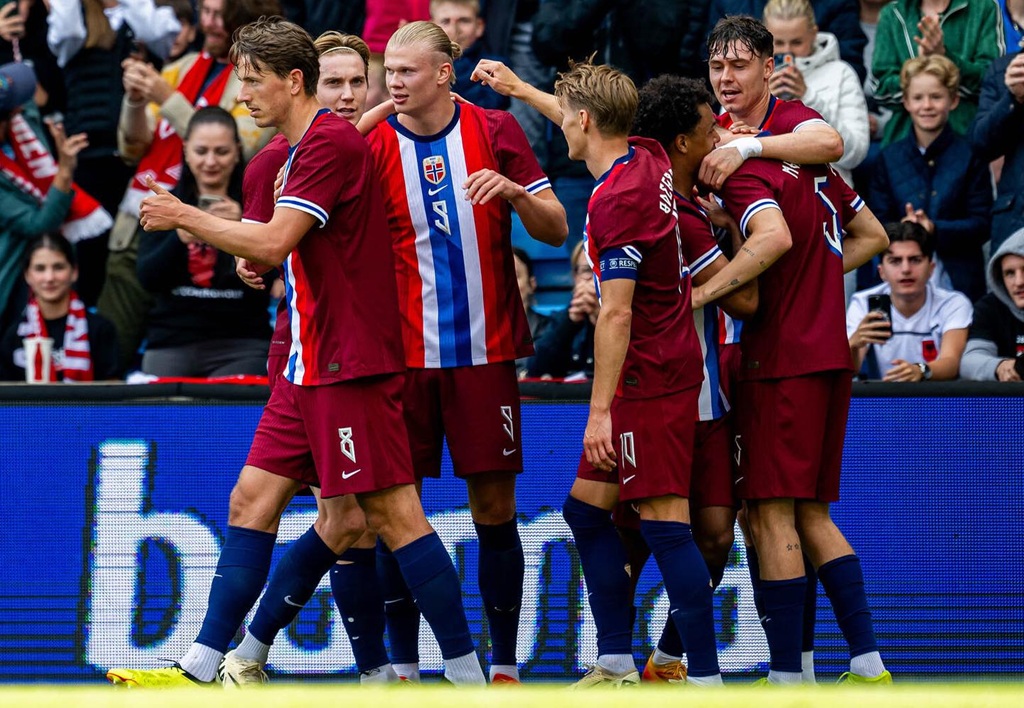
Erling Haaland is 7.00 at ibet and still has the strongest finisher profile in the field. Norway have scored 7 goals in 2 matches, beating Iraq 4-1 and Senegal 3-2, which keeps Haaland right in the Golden Boot conversation before the decisive final group match against France.
The value case is simple. Haaland does not need as many chances as most forwards. If Norway create volume, he can turn a shorter tournament run into a serious goal tally. He is also the clear attacking reference point for his team, which means Norway’s best chances usually flow toward him.
The concern is Norway’s route. They are not as likely as France, Argentina or England to go deep, and the match against France will shape their knockout path. Haaland at 7.00 is still interesting because the finishing ceiling is so high, but the bet depends on Norway staying alive long enough for his efficiency to matter. a legendary player in the final chapter of his international career, not a structural value pick.
Harry Kane’s Case
Harry Kane is priced at 9.00, which puts him fourth in the current Golden Boot market. His case remains easy to understand. He is England’s central striker, penalty taker and most reliable penalty-box finisher. Those traits always matter in this market.
England’s start has been mixed. The 4-2 win over Croatia showed their attacking ceiling, but the 0-0 draw with Ghana slowed the momentum. That draw matters because Golden Boot bets are built on volume, and Kane needs England to create more consistently if he is going to chase Messi, Mbappe and Haaland.
The upside is still real. England face Panama in the final group match, and that could be the fixture that puts Kane back into the race. At 9.00, he is no longer priced like a co-favourite, which makes him more interesting than he was at shorter pre-tournament odds. The risk is that England’s attack remains more controlled than explosive.
Cristiano Ronaldo’s Case
Cristiano Ronaldo is now 23.00 at ibet and replaces the pre-tournament younger names in the top 5. Portugal’s 5-0 win over Uzbekistan changed the tone after their opening 1-1 draw with DR Congo, reminding the market that this team can still produce heavy scoring games.
Ronaldo’s case is about role and finishing instinct. If Portugal continue creating chances, he still has the penalty-box movement and set-piece threat to stay relevant. Portugal also face Colombia in a final-round match that will decide the group, so the attacking stakes remain high.
The obvious risk is age and minutes. Ronaldo is no longer the automatic Golden Boot profile he once was, and Portugal have enough attacking depth to spread goals around. At 23.00, this is not a market anchor. It is a legacy-priced longshot with a live team context and enough upside to remain in the conversation.
Why Erling Haaland Stands Out
Goal Volume and Finishing Profile
The argument for Erling Haaland starts with finishing volume. Very few players in world football turn chances into goals as consistently as he does. He does not need Norway to dominate matches for 90 minutes. He needs service in dangerous areas, set-piece threat, and 2 or 3 high-quality moments. That is what makes him such a dangerous Golden Boot profile.
After 2 rounds, the case is even stronger than it was before the tournament. Norway have scored 7 goals in 2 matches, beating Iraq 4-1 and Senegal 3-2. That tells us this is not just a Haaland narrative. Norway are creating enough as a team to keep him in the race.
Team Context and Scoring Runway
Norway’s group was always difficult because France and Senegal were both serious tests. So far, they have handled the pressure. Wins over Iraq and Senegal mean Norway are in a strong position to reach the Round of 32, and the final group match against France will now shape their knockout path rather than decide whether their tournament is alive.
That matters for Golden Boot betting. Haaland does not need Norway to win the group to remain dangerous, but he does need Norway to keep playing meaningful matches. The extra knockout round in the 48-team format helps. Even a second-place finish could still give him another scoring opportunity before the bracket becomes much harder.
Price Versus Upside
At 7.00, Haaland is no longer the loose value he was before the tournament. The market has adjusted because Norway are scoring and his Golden Boot case is now obvious. Still, he remains far enough behind Lionel Messi at 2.75 and Kylian Mbappe at 3.00 to offer a different kind of value.
Messi and Mbappe have stronger team-path arguments. Argentina and France look more likely to go deep. Haaland’s edge is individual scoring dependency. Norway’s goals are more likely to flow through him than England’s through Harry Kane or Portugal’s through Cristiano Ronaldo. That concentration matters in a top goalscorer market.
What Has to Go Right
For Haaland to win the Golden Boot, Norway need to keep the tournament alive beyond the group stage. They likely need at least 1 knockout win, and Haaland probably needs to keep scoring at close to a goal-per-game pace. That is a high bar, but it is within his profile.
The France match is the key swing point. If Norway compete well, Haaland’s price could shorten again. If Norway are pushed into a difficult Round of 32 path, the risk increases. That is the bet in simple terms: Messi and Mbappe have the cleaner team routes, but Haaland has the finishing ceiling to stay with them even if Norway’s run is shorter.
Historical World Cup Golden Boot Trends
How Many Goals Usually Win
The raw historical record is instructive. Since 1994, the winning total has been five or six goals in most tournaments. Harry Kane’s six in Russia 2018, Davor Suker’s six in France 1998, James Rodríguez’s six in Brazil 2014333 this is the baseline. Only Ronaldo’s eight in 2002 and Mbappé’s eight in 2022 pushed past six in the modern era. Under the 48-team format, the expanded match schedule and the addition of weaker opposition in the groups makes five or six the floor, not the target. Expect the winning total in 2026 to be in the seven-to-nine range for the first time consistently. For example, players who can post hat-tricks or braces against weak group opponents and then score one or two in knockout games are the profile to back.
| Year | Winner | Goals | Team Result | Penalty Goals |
| 2022 | Kylian Mbappé | 8 | Runners-up | Yes |
| 2018 | Harry Kane | 6 | 4th place | Yes (3 penalties) |
| 2014 | James Rodríguez | 6 | Quarter-finals | No |
| 2010 | Thomas Müller | 5 | 3rd place | No |
| 2006 | Miroslav Klose | 5 | 3rd place | No |
| 2002 | Ronaldo | 8 | Champions | No |
| 1998 | Davor Suker | 6 | 3rd place | No |
| 1994 | Oleg Salenko / Hristo Stoichkov | 6 | Group stage / 4th | Yes / No |
What Past Winners Have in Common
Look beyond the goal total and the profile patterns become clear. Almost every Golden Boot winner played for a team that went at least to the semi-finals. Only James Rodríguez in 2014 won the award without reaching the last four, and he did so from a quarter-final exit which, under the 48-team format becomes even harder to replicate because there are now more rounds before the quarter-finals. Past winners were consistently their team’s primary penalty taker or first-choice striker. They scored in multiple knockout games, not just group-stage hauls. And they played every minute available, minimising the risk of losing the tiebreaker on minutes if another player matched their goal count.
Why History Is Useful but Not Enough
The 48-team format is a genuine structural break. Historical patterns built on a 32-team tournament have limited predictive power for 2026. The extra round of 16, the presence of more debutant nations, and the longer tournament mean everything from the winning goal threshold to the role of penalty shootouts in bracket advancement needs to be recalibrated. Use history as a baseline and a reference point — not as a template.
Betting Factors That Matter Most
Penalty Takers
Penalty duty is one of the most underweighted factors in Golden Boot markets and one of the most clearly quantifiable edges available to bettors who do their homework. A confirmed penalty taker in a team that plays seven or eight matches can realistically add one to three extra goals from the spot across a tournament. Those are high-conversion opportunities that do not require the player to do anything except place the ball and shoot. Kane in Russia 2018 scored three of his six tournament goals from penalties. Harry Kane in 2026 is again his team’s primary taker. Before finalising any Golden Boot selection, confirm the penalty hierarchy. A player who shares penalty duties with a teammate at club level but is the sole taker for their national team is worth a premium.
Team Advancement Path
This is the central variable. A player on a team that reaches the final plays eight games. A player on a team that exits in the Round of 32 plays three. The expected goal differential across that gap is enormous. When pricing Golden Boot candidates, the most important input is not the player’s individual scoring profile. Actually, it is the projected probability that their team will still be in the tournament in the semi-finals and beyond. Cross-referencing World Cup Golden Boot odds with team outright prices reveals inconsistencies: sometimes a player at 35.00 has a team with a better quarter-final probability than the player priced at 17.00. Those gaps are where value lives.
Group-Stage Mismatch Potential
In the 48-team World Cup, group draws carry more weight than they did in the 32-team era. A striker landing in a group with two debutant nations has a structural scoring advantage over a striker facing three established sides, even if both players are equally talented. Map each candidate’s group individually. Which opponents are genuinely beatable? In which games is a brace or hat-trick a realistic outcome rather than an optimistic one? Mbappé, facing Iraq and Senegal, offers two such games. Kane facing Ghana and Panama offers two. Haaland facing Iraq and Senegal offers realistic scoring games at the right point in the bracket. The mismatch analysis is simple and publicly available as group draws are announced and team rankings are transparent. Use them.
Rotation and Minutes
Managers at major tournaments rest players strategically, particularly once group qualification is secured. The third group game, especially for teams already in the top spot, often involves rotation, and key strikers may play 60 minutes rather than 90. Over a full tournament, rotation can cost a player one or two goals. Beyond rotation, injury risk compounds with every game played. When two candidates are evenly priced, the one who is more likely to play full minutes throughout or is younger, more durable, with a manager who rotates less, has a marginal edge that the market rarely prices explicitly. The FIFA tiebreaker on minutes also means that in the event of a dead heat on goals, a player who was substituted repeatedly could lose the award to someone who played every minute.
Climate, Travel, and Fatigue
The 2026 World Cup is hosted across the United States, Canada, and Mexico. Venue conditions vary dramatically. Matches played at high altitude in Mexico City, where the Estadio Azteca sits at 2,240 metres above sea level, present meaningful physical challenges, particularly for European players unaccustomed to the thinner air. High humidity in cities like Miami and Houston compounds fatigue in the knockout rounds. European teams travel from a different time zone and face recovery challenges that do not affect North American-based players in the same way. None of this eliminates a great player, but across a long tournament with short recovery windows, cumulative fatigue suppresses performance. Players on teams with more favourable travel schedules and fewer cross-continent fixtures have a marginal edge in the later rounds.
Tactical Role and Shot Volume
Not all attackers are created equal from a World Cup Golden Boot perspective. A central striker who is the focal point of his team’s attack and is constantly receiving crosses, occupying defenders, and taking the majority of his team’s shots on goal, is in a structurally better position than a wide forward who creates as much as he finishes. Shot volume drives expected goals, and expected goals drives scoring probability. Before committing to a long-odds pick, identify the player’s role within their national team setup, not their club setup. Some players who are central strikers at club level play deeper or wider for their country. Luis Díaz is a good example, as is Vinicius Jr, who operates as a left winger and creator for Brazil rather than as a pure finisher. The overlap between club profile and international role is not automatic.
Advanced World Cup Golden Boot Angles
Value Hunting Beyond the Favourites
The six names between 21.00 and 26.00 in this market represent the most interesting risk-reward tier for experienced bettors. Oyarzabal at 17.00 is a central striker for a strong Spain side with a soft group. His profile is almost purpose-built for this market, yet the price still offers genuine value relative to the top five. Lautaro Martínez at 26.00 is Argentina’s first-choice centre-forward in his prime, with a direct route to a deep tournament run. These are not longshots; they are structurally sound picks at prices that reflect the market’s preference for brand-name superstars over cold analytical profiles.
When Longshots Make Sense
The 35.00 to 40.00 tier makes sense as a small-stake flutter only when specific conditions align: the player is their country’s primary striker and penalty taker, the team has a realistic path to the semi-finals, and the group draw includes at least one genuinely weak opponent. Gakpo at 40.00 for the Netherlands fits two of those criteria. Wirtz at 40.00 for Germany, who are in Group E facing Curaçao and Ecuador, fits all three. These are not confidence bets; they are efficient use of small stakes on high-upside scenarios that are priced as true longshots.
Using Role and Usage to Spot Edges
The most repeatable analytical edge in this market is identifying players whose international role is better than their club role for goal-scoring purposes. A striker who is second-choice at a Champions League club but the undisputed number nine for a strong national team has a role upgrade at the tournament. This kind of player is often underpriced because the market tracks club form and reputation. Going into 2026, check every player in the 17.00 to 35.00 range for the gap between their club goal-per-game rate and their international rate. Players who score more per game for their country than their club do so typically because they have more freedom or a more direct role nationally and could be undervalued by a market highly dependent on club performance close to the World Cup 2026.
Correlation With Team Performance
There is a non-linear relationship between team performance and individual scoring in this market. The best World Cup Golden Boot candidates are on good teams but not necessarily the absolute best teams. That is because the very best teams tend to distribute goals across multiple attackers rather than centralising them in one striker. France is a good example: Mbappé is dominant, but France also score through Ousmane Dembélé, and others. By contrast, a team like Norway or England in 2026 is more heavily reliant on a single focal striker, which means a higher proportion of their goals flow through one man. This concentration effect means that backing the primary striker on a strong-but-not-dominant team is often better value than backing a player on the tournament favourite.
World Cup Golden Boot Betting Strategy
How to Build a Shortlist
Start with team advancement probabilities. Any candidate whose team has less than a 30 percent chance of reaching the quarter-finals should require an exceptional price before entering your shortlist as the goal ceiling from early exits rarely justifies the stake. From there, filter on role: primary striker or first-choice penalty taker only. Then map the group draw and identify which candidates have at least two favourable group fixtures. You should be left with four or five genuine candidates. Price those candidates based on their path probability multiplied by their per-game scoring rate, and compare to the market price.
When to Back Early
Early money on Golden Boot outrights is justified when you have a clear view on a player’s value relative to current pricing. The market will shorten for the leading names as the tournament approaches and media narrative builds around them. Haaland at 15.00, Oyarzabal at 17.00, and Lautaro at 26.00 are all candidates who could see their prices compress as the tournament gets closer and public attention sharpens. If you believe the value is there now, backing before that narrative compression is the right move.
When to Wait
Wait on players where injury or fitness uncertainty is a real variable. Neymar at 40.00, for example, is not a bet to make months in advance when his availability for the tournament is still unresolved. Wait also on players whose penalty duty or starting role for their national team is not yet confirmed. These are situations where patience is rewarded; the information will resolve before kick-off, and the price may still be reasonable when clarity arrives.
World Cup Golden Boot Common Mistakes
The most common mistake in Golden Boot betting is selecting a player based on club form without checking their national team role. The second is ignoring the dead-heat risk in tight markets. The third is over-concentrating on a stake in one player at a short price when the same money spread across two or three mid-market candidates offers better expected value. Back the profile, the path, and the price in that order.
World Cup Golden Boot Betting FAQs
Do Extra Time Goals Count for the World Cup Golden Boot?
Yes. Goals scored during extra time in knockout matches count toward a player’s Golden Boot tally in full. They are treated identically to goals scored in normal play.
Do Penalty Shootout Goals Count for the World Cup Golden Boot?
No. Penalty shootout goals are not part of competitive play and do not count toward the Golden Boot. Only goals scored during the 90 minutes of normal time and any additional extra time periods are included in the tally.
What Happens if Players Tie?
Under FIFA’s official Golden Boot rules, a tie on goals is resolved first by assists, then by minutes played (fewer minutes is considered more efficient). Under ibet’s sportsbook settlement for the top goalscorer market, dead-heat rules apply: stakes are divided by the number of tied players before calculating returns. Check ibet’s specific terms before placing.
Can a Player on a Weaker Team Win a World Cup Golden Boot?
Yes, and actually, it has happened before. For example, James Rodríguez won in 2014 with Colombia, who were eliminated in the quarter-finals. Under the 48-team format, a player on a strong-but-not-elite team with a favourable group draw and penalty duty could realistically post seven or eight goals before an earlier-than-expected exit ends their tournament. It requires elite individual performance, but the expanded format creates more scoring opportunities in the group stage that can offset a shorter overall tournament.
How Many Goals Usually Win the World Cup Golden Boot?
In modern 32-team World Cups, five or six goals has typically been sufficient. The 48-team format in 2026, with its extra round and more matches against weaker opposition, is expected to push that threshold toward seven or eight. A player who scores heavily in the group stage and then adds knockout goals has the most robust profile for the award under the new structure.
All odds displayed on this page were correct at the time of writing and reflect ibet’s World Cup 2026 Golden Boot market. Betting markets shift constantly based on action and news. For the latest odds and current lines, visit the ibet Sportsbook. Bet responsibly.