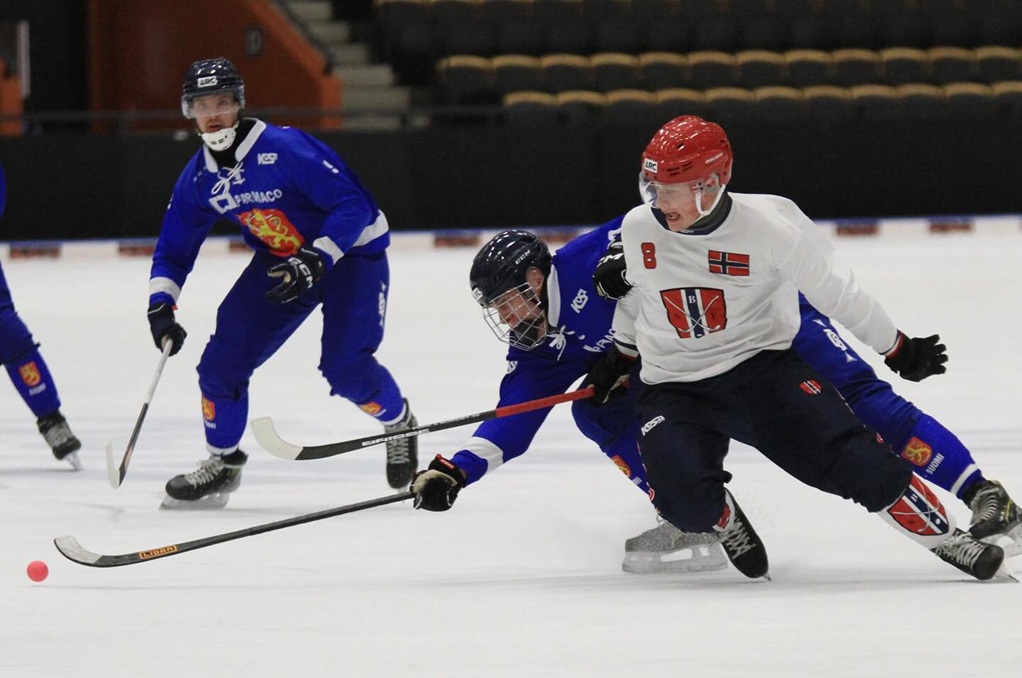
The Bandy World Championship 2026 is currently underway this week, and it features the sport’s most elite competitors battling for international supremacy. If you’ve been searching for “how to bet on bandy”, “bandy betting” or wondering whether this niche winter sport deserves your attention, the answer is a resounding yes, especially if you’re a player with a cultural understanding of the game that casual bettors simply cannot replicate.
Did you know that bandy represents the world’s second-most played winter team sport after ice hockey? However, it remains virtually unknown outside Nordic and Eastern European regions. This geographic concentration creates an extraordinary betting advantage for players from these areas: you possess inherent knowledge advantages that mainstream bookmakers might have just begun to price efficiently. While global sportsbooks have spent decades optimising football and ice hockey odds, bandy betting markets remain analytically neglected, creating consistent value opportunities for informed bettors.
The 2026 World Championship happening right now serves as a perfect entry point to understand why bandy betting differs fundamentally from mainstream sports wagering. Record numbers of nations participate this year, global betting interest continues rising, and the championship finals represent some of the highest-quality competitive matches the sport produces.
Even more compelling: the sport’s unique structural characteristics, which centre on high scoring, continuous play, large playing fields, and prohibition on body checking, create betting patterns that differ so dramatically from football and ice hockey that traditional sports betting strategies often fail.
Best part? You can take advantage of this knowledge to enjoy the bandy odds available at ibet and learn more about this sport while making it more captivating.
This bandy betting guide explains not just how to place a bandy bet, but why informed players should prioritise bandy betting over oversaturated football markets where thousands of professional bettors continuously compress already-thin margins.
By the time you finish reading, you’ll understand the sport’s mechanics, why specific bandy betting markets work better than others, and actionable strategies to identify genuine value that could be mispriced.
Don’t forget to check out our promotions page to take advantage of the latest deals and bonuses to make the most of your bets on bandy at ibet’s sportsbook!
Sport Fundamentals & What Makes Bandy Betting Uniquely Profitable
Understanding bandy’s physical structure matters because every game characteristic translates directly into betting implications. Unlike sports where rules represent arbitrary traditions, bandy’s design has created a high-scoring, skill-driven environment that experienced bettors can model and exploit systematically.
The Foundation: Field Size, Duration, and Continuous Play
Bandy is played on a football-pitch-sized field measuring 90-110 metres by 45-65 metres. This is substantially larger than ice hockey’s cramped 60-metre by 25-30-metre surface. This bigger field creates fundamental differences in how matches develop and score.
The 90-minute continuous play structure (divided into two 45-minute halves with no stoppages, unlike ice hockey’s three discrete 20-minute periods) means players experience linear fatigue accumulation rather than refresh cycles.
This continuous fatigue pattern has profound betting implications: goal scoring increases dramatically in the final 20 minutes as defensive units deteriorate. Astute bettors exploit this by placing “second-half over” bets when first-half matches remain below expected totals.
A match showing 4-3 after 45 minutes suggests approximately 7-8 total goals at the current pace. However, the final 20 minutes typically produces 20-30% more goals than the per-minute average, meaning second-half totals can often be mispriced upward (bookmakers could underestimate fatigue-driven scoring increases).
The 11-player structure (10 outfield players plus one goalkeeper) mirrors football’s formation flexibility rather than ice hockey’s rigid six-player structure. Teams employ formations like 3-5-2, 4-4-2, or 4-3-3, allowing rapid tactical adjustments mid-match.
This formation flexibility means early-match tactical setup provides limited predictive value for final match outcome. For example, teams that start defensively may shift to aggressive attacking in the second half without warning. Live bettors who overweight first-half formation observations often miss second-half tactical pivots.
Why Bandy’s High-Scoring Nature Creates Betting Advantages
Professional bandy matches average 10-12 combined goals. This figure dwarfs football’s 2.5 to 3 goal average and even exceeds ice hockey’s 5-6 goals. This high-scoring characteristic reflects several design features: the enormous goal size (3.5 metres wide by 2.1 metres high, substantially larger than football’s 7.32m × 2.44m goal proportionally), the larger playing surface enabling more attacking sequences, and the skill-based (rather than physically based) nature of defence.
Here’s where bandy betting becomes genuinely profitable: Bookmakers across mainstream sportsbooks could set over/under goal lines based purely on historical league averages without incorporating contextual variables that dramatically shift expected scoring.
For example, a match between Sweden’s top-performing attacking team (averaging 1.7 goals per 90 minutes) versus a significantly weaker defensive unit (allowing 1.3 goals per 90) should project to approximately 10-12 combined goals. Yet bookmakers often offer 9.5-under at even money odds, failing to account for the specific team pairing’s characteristics.
To exploit this, calculate both teams’ scoring rates using available match data: Goals Scored ÷ 90-minute equivalents for offensive rate, and Goals Allowed ÷ 90-minute equivalents for defensive rate. Match a high-scoring team (1.7+ goals/90) against a weak defensive unit (1.3+ goals allowed/90), and you’ve identified potential over/under value. This analysis takes 10 minutes but generates measurably better decisions than accepting bookmaker defaults.
The variance in individual matches proves substantial, given matches range from 6 to 16 total goals even within the same league. This variance means contextual knowledge matters enormously. When a bookmaker sets the line at 9.5 without considering team-specific factors, the margin for sophisticated bettors widens considerably compared to football, where decades of statistical analysis have compressed spreads to razor-thin margins.
The Offside Rule: Creating Systematic Attacking Patterns
Unlike ice hockey, bandy employs strict football-style offside enforcement. Attacking players cannot remain closer to the opposing goal line than both the ball and the second-to-last defending player.
This rule creates what might seem like a minor technicality but actually produces major betting implications: attacking sequences become predictable. Teams develop established attacking structures rather than chaotic ice-hockey-style offensive pressure. This predictability works in favour of informed bettors because established patterns become modellable.
In bandy, set pieces like corner strokes and free strokes account for 30–50% of all goals scored. In football, they only account for 25–30%. This elevated set-piece contribution means teams that excel at set-piece conversion (either attacking or defending) show systematic performance advantages over multiple matches. Research the opponent’s set-piece efficiency by reviewing recent match summaries available.
The offside rule also prevents “goal hanging” tactics that occasionally appear in field hockey. This means attacking plays develop with meaningful tactical structure rather than luck-based positioning. For bettors, the result translates to: team quality differences prove more predictable because skill advantages compound through structured play rather than random chaos.
Physical Contact Restrictions: Enabling High-Variance Comebacks
Bandy explicitly prohibits body checking; defensive contact is limited to “shouldering” (using body position to jostle opponents for position rather than attempting to physically dominate). This restriction fundamentally changes match dynamics compared to ice hockey.
In ice hockey, dominant teams can “grind out” victories through superior physical play and defensive intensity and essentially stalling opponents’ offensive opportunities. Bandy’s restriction eliminates this possibility. Strong teams cannot force defensive attrition; they must defend through positioning, stick-checking, and tactical intelligence rather than physical intimidation.
The betting implication proves critical: comebacks remain viable even with substantial deficits. A team trailing 5-2 with 15 minutes remaining has a materially higher probability of tying or winning compared to an equivalent ice hockey deficit because the defending team cannot physically shut down the match. Live betting odds frequently overprice leading teams’ victory probability when considering possible comebacks.
This factor particularly impacts the final 20 minutes of matches. A team with a 3-4 goal lead against a competitive opponent should not command as high a win probability as equivalent ice hockey leads because bandy’s skill-based defence permits rapid scoring sequences. Monitor live odds in the final 20 minutes: when leading teams show 1.30+ odds to win despite possessing only 3-4 goal advantages, live under bets on total goals in the final minutes often offer value (desperate trailing teams may surrender quick goals, but the final 20-minute over/under lines already account for increased scoring velocity).
Team Quality Variance: Hidden Mispricings in Bandy Betting
Bandy’s geographic concentration creates extreme team quality disparities. Norway, Sweden, Russia, and Finland represent vastly superior competitors compared to emerging nations like Kazakhstan, China, USA, and Mongolia. This disparity dwarfs typical quality gaps in mainstream sports.
Consider the 2025 World Championship: Sweden defeated Hungary 31-0. While lopsided scorelines surprise casual observers, they reflect the reality that Nordic teams possess fundamentally superior skill, conditioning, and tactical sophistication compared to emerging competitors. The equivalent quality disparity in football might produce 5-0 or 6-0 results; in bandy, 25+ goal margins occasionally occur.
Bookmakers could misprice handicap lines in these lopsided matchups because casual bettors avoid extreme spreads (15:1 moneyline odds feel uncomfortable despite being theoretically accurate). Asian handicap markets offering -4.5 or -5.5 spreads on Sweden versus emerging nations sometimes undervalue favourites because reduced betting volume on extreme lines prevents efficient price discovery. When a -4.5 spread team would typically expect 4.5+ goal margins, but historical data suggests 8-12 goal average margins in these matchups, value emerges for informed bettors comfortable accepting wider spreads.
Track historical results: Sweden’s average margin versus emerging nations, Russia’s typical margins versus non-Nordic teams, and Finland’s performance across different opponent tiers. This data accumulates quickly in bandy because matches occur frequently throughout the November-April season. Bettors who invest 20-30 minutes building this reference dataset could gain meaningful advantages over bookmakers relying on generic spread calculations.
Bandy Betting Markets Explained: Why Three Markets Dominate
Unlike mainstream sports betting, which offers 50+ betting options, bandy betting at Ibet concentrates on three fundamental markets. This market limitation reflects both the sport’s regional nature and operational constraints at sportsbooks. Understanding which markets work best for bandy separates casual bettors from professionals. If you need to begin with more basic concepts, feel free to check our guides for general betting strategies.
Outright Winner (1X2): Basic But Suboptimal for Bandy
The three-outcome market (Home Win, Draw, Away Win) represents the foundational betting product. Most bettors begin with 1X2 because it feels intuitive: pick who wins.
Why 1X2 underperforms for bandy betting: Draw rates in bandy approximate 15-20% of matches, compared to football’s 25-30%. This lower draw probability means the three-way split becomes inefficient. The true probability distribution across three outcomes doesn’t match the symmetrical odds structure most bookmakers employ. Bettors forced to choose across three outcomes (rather than the more efficient two-outcome structure) face wider effective spreads.
Additionally, 1X2 markets generate wide odds ranges when one team dominates heavily. Sweden versus emerging nations might show 1.10 to 1.15 odds for Sweden (barely compensating bettors for risk) while underdogs see 25.00+ odds. These extreme odds ranges could indicate bookmaker uncertainty and wide spreads, making efficient betting difficult.
When to use 1X2: Casual small wagers on tournament favourites or underdogs where market inefficiency creates obvious value. Avoid value-betting hunting or regular strategic betting.
Over/Under Total Goals: Optimal Market for Bandy Betting
The over/under market represents the primary profit center for serious bandy bettors. Bookmakers set typical lines at 9.5-10.5 combined goals, reflecting historical league averages. Yet this static approach ignores the contextual factors that substantially impact actual scoring.
To identify over/under value: Calculate expected goals for each team separately using historical data. For Team A: (Team A scoring rate + Team B defensive rate) ÷ 2. Repeat for Team B. Sum these projections and compare against the offered line. If you project 11+ combined goals but bookmakers offer 9.5-under at -110, the over contains value (you’re getting favourable odds relative to your projection).
Over/under markets also benefit from live betting adjustments. After the first 45 minutes, if a match shows 4 combined goals at halftime, bookmakers often adjust second-half totals insufficiently for fatigue-driven scoring increases. A 2nd-half over/under of 4.5 goals when you expect 5+ goals in the second half presents clear value.
Asian Handicap: Eliminates Draw Uncertainty
Asian handicap markets assign goal spreads (-1.5, -2.5, -3.5, etc.) to teams, creating two-outcome betting rather than three-outcome uncertainty. For bandy, this structure proves more efficient than 1X2 because it removes the 15-20% draw probability from the equation.
Why handicap beats 1X2 for bandy: Each outcome becomes effectively a 50-50 proposition when spread correctly. A -3.5 favorite handicap on Sweden versus an emerging nation means Sweden must win by 4+ goals for the favourite bet to win. This two-outcome structure generates tighter spreads and more efficient odds than 1X2’s three-way split.
Handicap markets prove particularly valuable for international tournaments where team quality disparities are substantial.
For domestic leagues like the Swedish Elitserien, handicap spreads typically range from -1.5 to -2.5, reflecting more balanced competition. These tighter spreads still outperform 1X2 betting for value hunting because the two-outcome structure eliminates inefficient three-way probability splitting.
Bandy Betting on the World Championship & International Competitions
The 2026 World Championship: Timing Your Entry into Competitive Bandy Betting
The Bandy World Championship 2026, currently underway this week, represents the sport’s most prestigious and highest-quality competition. Held simultaneously for men’s and women’s tournaments, the championship features record participation across two divisions (Division A with elite teams and Division B with emerging competitors).
The tournament structure features preliminary group stages leading to knockout semifinals and finals. This format creates distinct betting phases with different strategic requirements. Preliminary matches often see larger goal spreads and higher volatility as dominant teams establish dominance; knockout stages tighten competition and reduce scoring variance as inferior teams fall away.
Sweden historically dominates both men’s (defending champion, 15 total championships) and women’s (majority of championships) World Championship competitions. Russia’s men’s team represents the historical powerhouse with 24 total championships, though recent years show more competitive balance. Finland has captured one men’s championship (2004) but consistently reaches finals, establishing themselves as third-tier elite competitors.
These historical dominance patterns persist in 2026.
Nordic Leagues: Banndy Betting Opportunities Beyond the Championship
Swedish Elitserien: Represents the world’s highest-quality domestic bandy league. Sixteen teams compete November through April in a structured league season featuring playoffs determining the champion. This extended season generates consistent weekly betting opportunities.
Top teams include Villa Lidköping BK (multiple Elitserien champions), Hammarby IF (traditional strength, major Stockholm club with strong home advantage), and AIK Bandy (historic competitor). These consistent powerhouses create predictable favourite/underdog dynamics and, unlike football where mid-tier teams frequently upset elite competitors, bandy’s skill-emphasis maintains stronger separation between tiers.
Search terms like “Elitserien betting,” “Swedish bandy odds”, and “Villa Lidköping betting” attract bettors researching the league. Bandy bettors particularly engage with Elitserien content given its domestic focus.
Finnish Bandyliiga: Finland’s domestic league operates independently with strong local interest despite less international prominence than the Swedish Elitserien. The Bandyliiga features 10 teams competing with deep-rooted regional loyalty. Teams like TPS, KeuPa, and various Oulu-based competitors maintain dedicated supporter bases driving consistent domestic betting volume.
Finnish bandy betting represents an underserved niche market: minimal international coverage creates information asymmetries favoring informed bettors that understand team dynamics, coaching changes, and regional rivalries. Search terms “Finnish bandy betting,” “Bandyliiga odds,” and specific Finnish team names attract geographically-concentrated demand.
Norwegian Eliteserien: Norway’s domestic league operates as a secondary tier to Swedish Elitserien in terms of global prominence. However, Norwegian domestic interest remains strong. The league features competitive matches and strong regional pride.
Bettors searching “Norwegian bandy betting” and “Eliteserien odds” represent a dedicated segment.
Russian Bandy Super League: Russia’s 14-team professional league operates November-March with Moscow-based teams (including SKA-Neftyanik), Arkhangelsk-based Vodnik (historically dominant), and Krasnoyarsk competitors. The Russian league represents a secondary betting market with lower international operator coverage and primarily Russian-language resources.
Seasonal Patterns: Timing Your Bets for Maximum Value
Understanding bandy’s seasonal dynamics creates substantial betting advantages because match quality, team focus, and betting volatility vary dramatically across the November-April window.
November Start (Season Opening): Teams emerging from the off-season show inconsistent form. Players lack match fitness; coaching adjustments remain untested. This volatility creates higher variance in match outcomes and wider spreads in betting lines.
Betting implication: Avoid heavy favourites in November, as teams that are expected to dominate sometimes underperform due to preparation gaps or early-season adjustment periods. Value often emerges in underdog handicap bets where casual bettors overweight historical dominance and underweight seasonal rust.
January (World Championship Insertion): The World Championship typically occurs mid-January, disrupting regular league schedules. Participating nations focus resources and player attention toward international competition; league matches become a secondary priority.
Betting implication: direct World Championship betting (discussed above), and exploited domestic league matches where competing nations’ players miss matches due to international duty. A Swedish Elitserien match featuring multiple Sweden-focused players might show depressed quality versus typical matchups.
February-March (Mid-Season Establishment): Teams establish consistent form, elite competitors separate from mid-tier teams, and championship contenders emerge. Favorites become more reliable; upsets decrease in frequency.
Betting implication: Over/under markets become more accurate as team characteristics stabilize. Form-based betting strategies prove more effective because recent matches better predict immediate future performance. However, value hunting becomes harder as bookmakers price more efficiently based on established team profiles.
March-April (Playoff Push): Championship contenders enter critical matches; teams secure playoff positioning or face elimination. Intensity increases; outcomes become tighter and higher variance returns.
Betting implication: Matches featuring playoff-positioned teams show different scoring patterns than regular-season equivalents. This increased tactical caution and defensive focus reduces scoring. Teams mathematically eliminated from championship contention sometimes show reduced intensity. Monitor playoff scenarios before placing wagers.
Bandy Betting Strategies & Actionable Tips
Knowing what makes bandy betting unique separates casual understanding from profitable betting. Converting structural knowledge into actionable strategies requires systematic approaches designed specifically for bandy’s characteristics.
Strategy 1: Exploit Team Quality Disparities Through Handicap Betting
Bandy’s lack of body-checking means stronger teams cannot “grind out” defensive victories through physical attrition. This characteristic makes larger goal spreads viable because defensive stalling simply doesn’t work.
Execution: Identify quality-level matchups where one team significantly outclasses competition. World Championship preliminary rounds feature Sweden versus emerging nations; Swedish Elitserien shows title contenders versus relegation-threatened teams. Calculate expected goal margin based on historical scoring/defensive rates.
Risk Management: Confirm home/away performance variance. Some teams show 15-20% performance differences between home and away matches (crowd support, travel fatigue, familiarisation). Adjust margin projections accordingly.
Strategy 2: Over/Under Totals Based on Team Pairing Analysis
Bookmakers set static over/under lines frequently without accounting for specific team pairings’ scoring dynamics.
Execution:
- Calculate team metrics from recent match data: Team scoring rate = goals scored ÷ 90-minute equivalents played. Team defensive rate = goals allowed ÷ 90-minute equivalents played.
- Project match totals: (Team A scoring rate + Team B defensive rate) ÷ 2 = Team A expected goals. Repeat for Team B. Sum for total projection.
- Apply intensity factor: Tournament matches (World Championship) expect 1.1-1.2× multiplier versus regular season (higher motivation). Playoff matches (March-April) expect 0.9-1.0× multiplier (defensive caution).
- Compare to line: If you project 11 combined goals but 9.5-under offers -110 odds, the over contains value. If projection yields 8.5 goals but 10.5-over asks for -110 odds, under holds value.
Data Sources: The World Bandy Federation maintains tournament records with goal breakdowns by team.
Strategy 3: Live Betting Momentum Tracking & Fatigue Capitalization
Bandy’s continuous scoring creates a predictable rhythm as goals cluster mid-match and dramatically increase in the final 20 minutes. Feel free to take advantage of our bandy odds for live betting.
Execution:
- 0-20 minutes: Opening period establishes territory control but doesn’t predict final outcome. Early goal scorer odds often misprice; live lines may show +120 or +130 odds for scoring in minutes 21-45 when you expect increased scoring (teams adjusting to opponent tempo).
- 20-65 minutes: Established play pattern emerges. Goals steady at approximately 1-2 per 20-minute segment. Live totals market reflects consistent pacing.
- Final 20 minutes: Fatigue and desperation create goal clusters. Trailing teams increase attacking pressure; leading teams occasionally lose focus or commit defensive errors. Final 20-minute segments with <2 combined goals to date and under/over 4.5 lines frequently offer over value (expect 2-3 goals in final segment as fatigue accelerates scoring).
Action: Lock in “2nd half over” bets when first 45 minutes shows below-projection scoring. If match shows 6 combined goals at halftime (projection: 11), 2nd half expects 5+ goals. Bookmaker 2nd-half totals of 4.5-under likely misprice.
Strategy 4: Weather & Ice Condition Monitoring
Unique to ice-based sports: temperature and ice conditions materially impact scoring.
Execution:
- Extreme cold (-20°C or colder): Ice becomes brittle; player mobility decreases; scoring reduces 10-15% versus baseline.
- Warmer conditions (-5°C to 0°C): Ice softens; play accelerates; scoring increases 5-10%.
- Fresh snow: Slows play; grip reduces for stick/feet; scoring decreases.
- Established ice: Optimal conditions; baseline scoring.
Local bettors possess an inherent weather familiarity advantage as they understand cold-weather impacts that international bettors often ignore. Monitor pre-match weather forecasts (Swedish Väder, Finnish weather services, and Norwegian forecasts) and adjust over/under analysis accordingly.
Example: If you project 11 combined goals but forecasts show extreme cold with fresh snow, reduce the projection to 9.5-10. If bookmakers still offer 10.5-over at -110, under shows value.
Bandy Betting FAQs – Frequently Asked Questions
Is bandy betting profitable?
Professional bettors can profit through systematic analysis of betting markets, particularly in over/under and handicap markets where bookmakers apply insufficient contextual adjustment. The sport’s niche status creates information asymmetries (smaller analytical communities, less professional competition) that allow skilled bettors to identify value. Casual bettors should approach it recreationally, understanding that consistent profitability requires disciplined bankroll management, ongoing data collection, and strategy refinement.
What’s the difference between bandy and ice hockey betting?
Bandy’s larger field (90-110m versus 60m), higher scoring (10-12 goals versus 5-6 goals), and continuous play (90 minutes versus 60 minutes in three periods) create fundamentally different betting dynamics. Over/Under markets become more efficient in bandy due to higher variance in goal production; Asian handicap outperforms 1X2 more dramatically in bandy due to lower draw probability (15-20% versus 25-30% in football). Bandy’s physical contact restrictions enable higher comeback probability versus ice hockey’s defensible leads.
When does bandy season start?
Domestic league seasons (Swedish Elitserien, Finnish Bandyliiga, Norwegian Eliteserien) typically begin in November and conclude in April. The Bandy World Championship occurs typically mid-January (currently underway this week in 2026). The off-season runs from May to October with minimal international betting activity. Planning your bandy betting calendar around the November-April window maximises available matches and tournament opportunities.
What’s a bandy world championship betting tip?
Research team form and historical head-to-head records before placing championship wagers. Nordic teams (Sweden, Russia, Finland) demonstrate consistent dominance; emerging nations represent underdogs even with quality improvements. Leverage home advantage when tournaments occur in Nordic venues (Nordic teams perform 10-15% better at home due to ice familiarity and crowd support).